
2026-09-04 ·
What a Slab Leak Looks Like in Santa Ana Homes
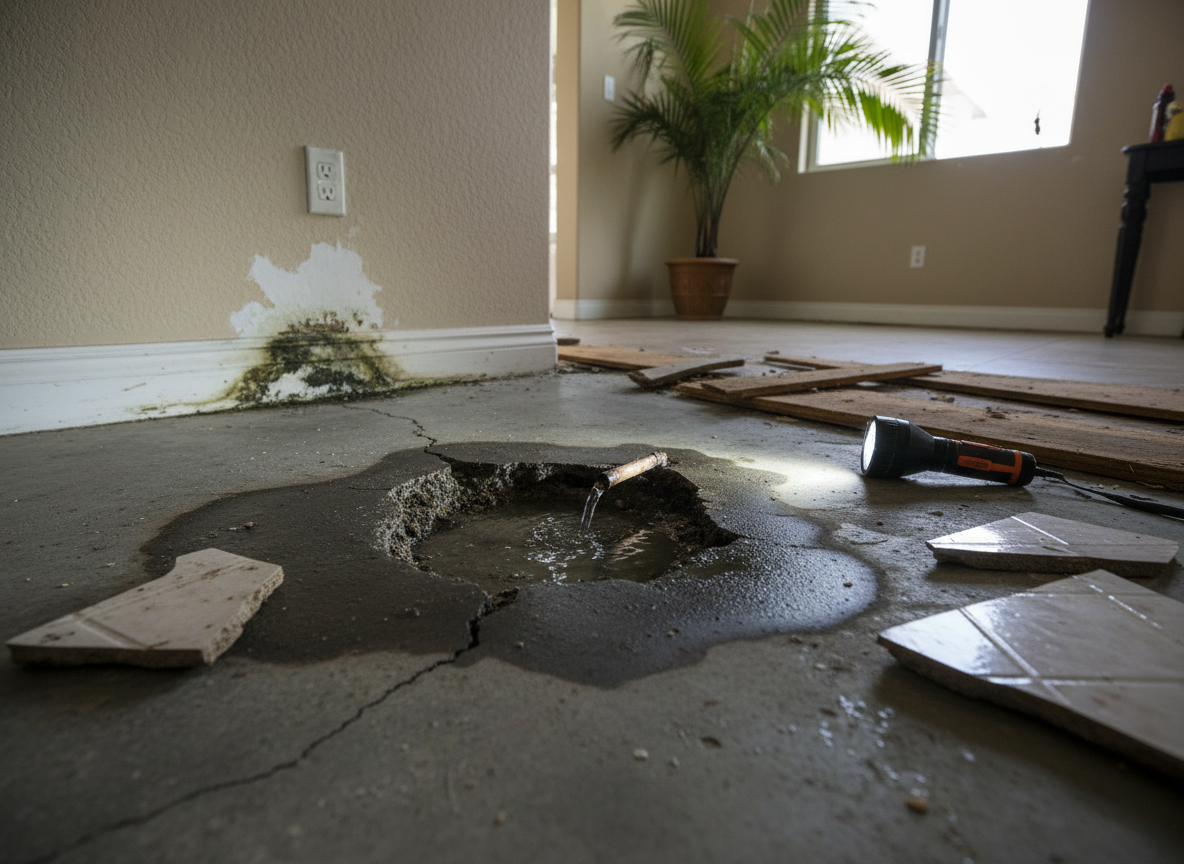
Slab leaks in Santa Ana homes typically show up as unexplained warm patches on tile or carpet floors, higher water bills without visible dripping, or musty odors near the foundation in older properties.
Visible Signs in Santa Ana Homes
Homeowners in areas such as Lacy and Park Santiago often notice persistent moisture along baseboards or discoloration on concrete slabs after the Mediterranean climate brings its mild winters. These leaks commonly stem from aging copper lines under 40- to 60-year-old foundations common in Heninger Park and Artesia Pilar. Cracks in the slab itself can widen when soil shifts slightly during dry summers, allowing water to seep upward and create soft spots underfoot. Residents near the Santa Ana River sometimes report pooling water in yards that traces back to the slab rather than surface runoff. Checking for these patterns early prevents larger floor damage in single-story ranch homes typical throughout Santa Ana Triangle and Flower Park.
How Local Conditions Influence Slab Leaks
Orange County's Mediterranean climate with warm dry summers and mild winters accelerates pipe corrosion in homes built before the widespread use of PEX. Soil in Delhi and Logan neighborhoods tends to be clay-heavy, expanding and contracting with seasonal moisture changes and stressing buried lines. This movement often leads to pinhole leaks at joints after 15–25 years. Proximity to nearby cities like Irvine and Anaheim means similar housing stock faces the same issues, but Santa Ana's denser older blocks see more frequent calls during the first warm weeks of spring when irrigation ramps up. Concrete slabs poured in the 1960s lack modern vapor barriers, allowing groundwater to migrate when winter rains are lighter than average.
Plumbing Realities in Older Neighborhoods
French Park and Santa Ana Triangle contain many 1950s–1970s homes with galvanized or early copper supply lines running under slabs, making them prone to leaks where pipes meet the foundation edge. These setups differ from newer construction in Park Santiago, where builders used better sleeving. Shifts from nearby fault activity or simple settling can separate fittings over decades. Replacing galvanized pipes in older Santa Ana houses explains the material differences residents encounter. Slab leaks here rarely involve dramatic flooding at first; instead they create gradual efflorescence on garage floors or elevated humidity in adjacent rooms.
Detection Steps for Santa Ana Properties
Start by monitoring the water meter at the curb for movement when all fixtures are off, a reliable first check in any Santa Ana home. Thermal imaging cameras reveal temperature differences along slab edges in MainPlace Mall-adjacent neighborhoods where homes sit close together. Acoustic listening devices help isolate flow sounds without breaking concrete right away. Leak detection locates the precise section under 4- to 6-inch slabs common locally. Once found, targeted pipe repair often involves tunneling from the exterior rather than full slab removal, preserving original flooring in places like Bowers Museum's surrounding residential blocks.